Fast garage door repair in ClearwaterCall (727) 663-1991

Clearwater, FL

Garage Door Opener Repair Across the Clearwater Area

Opener won't open, reverses, or grinds? We fix garage door openers across Clearwater's 1960s-70s housing stock, from Belleair to Oldsmar. Same service area, every town.

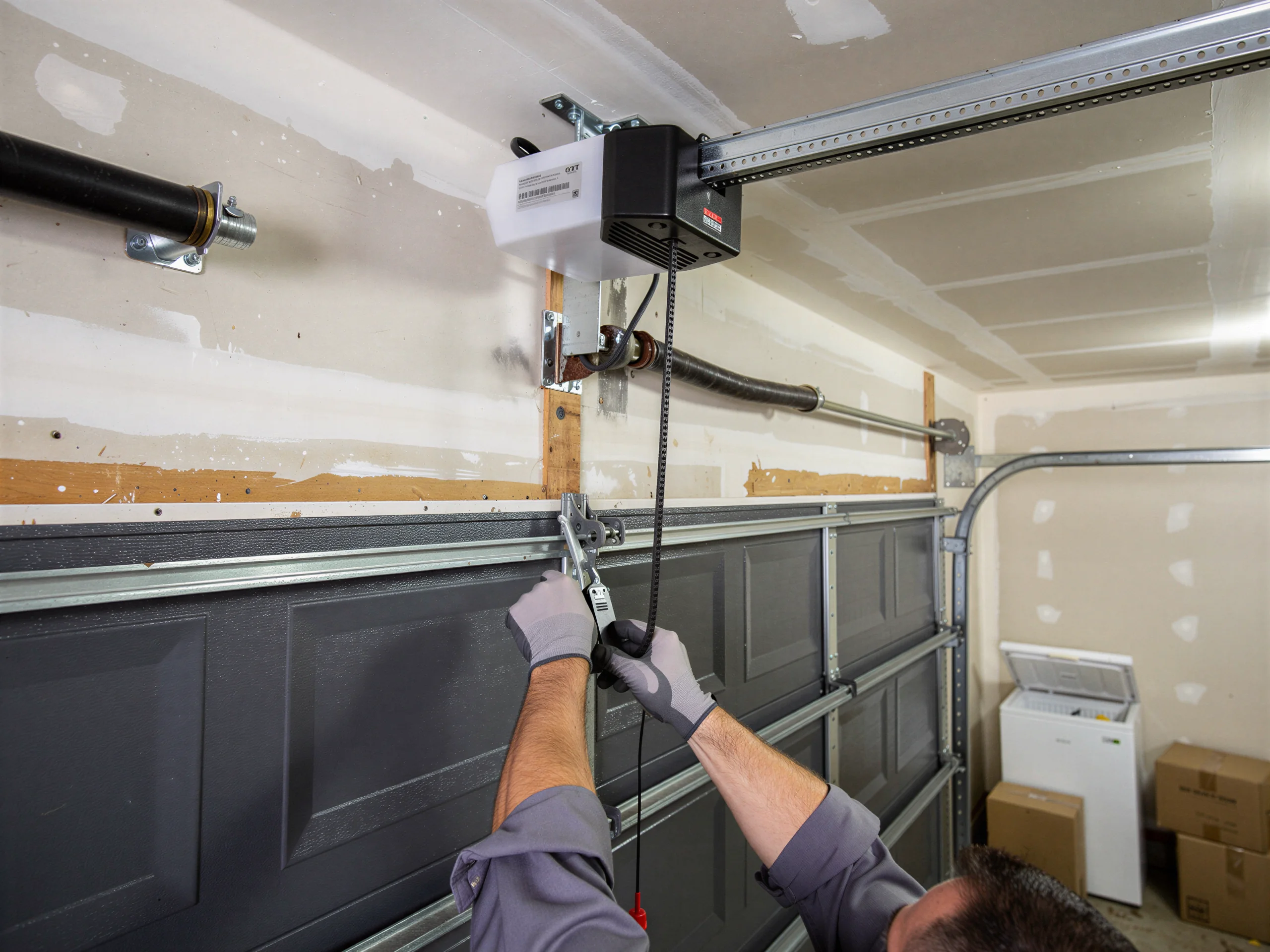
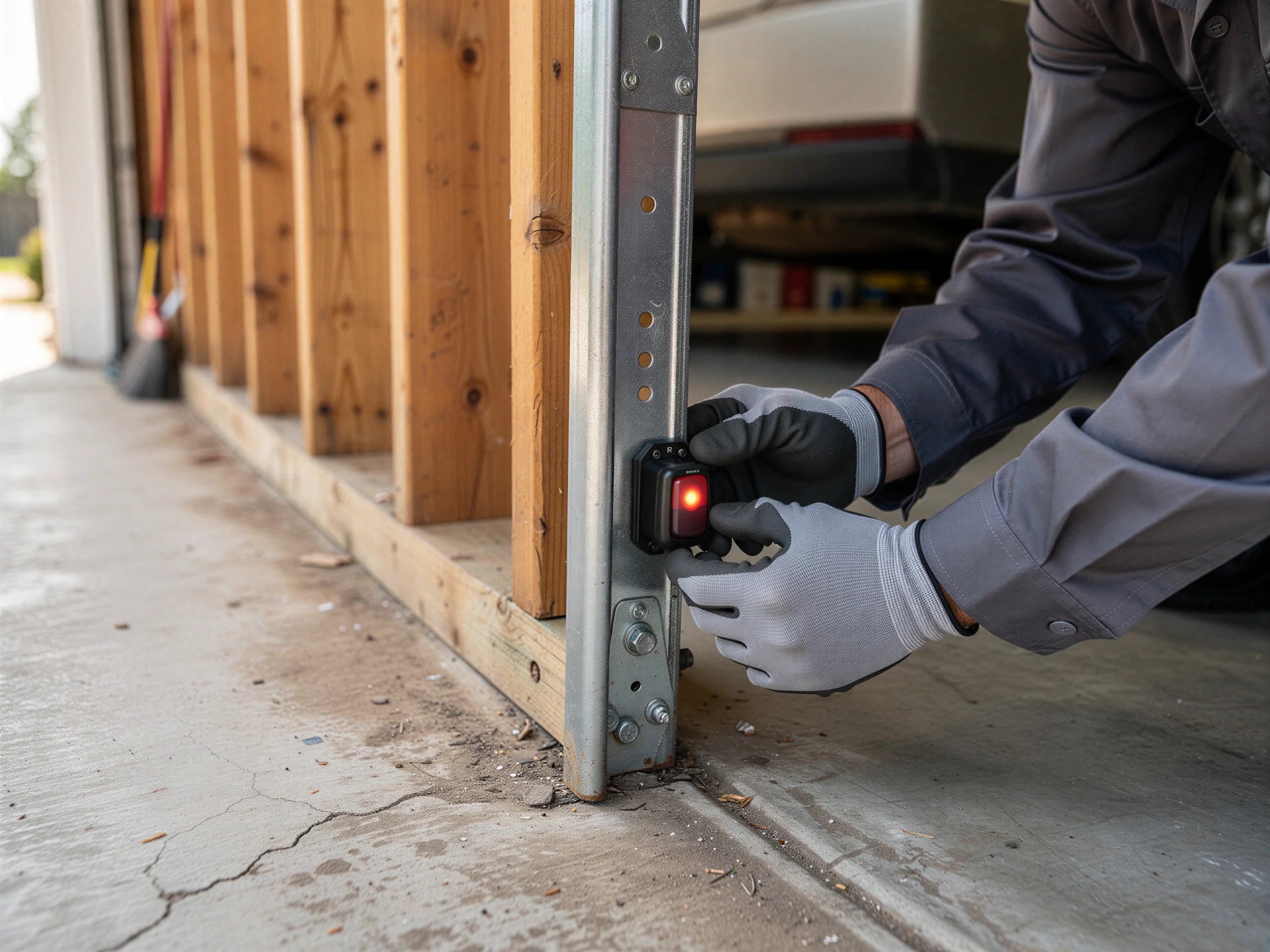
A technician in gloves adjusts a garage door safety sensor with a red light.
Serving Clearwater, FLBackground-checked techsHonest, upfront pricingFast local response
Local
Crews that work this area daily
Same-day
Response for most repair calls
Upfront
Pricing agreed before we start
Insured
Background-checked technicians

Symptoms

The Symptom

The opener hums but the door doesn't move. Or it starts up and reverses halfway, like something invisible is pushing back. Some units just go dead - no light, no click, nothing when you hit the wall button or the remote.

Opener blinks, no close

Others open fine but won't close, sitting there blinking at you while the motor runs and the door stays put. Sometimes it's a grinding sound before the chain or belt gives out entirely, and the carriage just sits stalled on the rail.

Sensors refusing to close

Sometimes the safety sensors throw an error and refuse to let the door shut, even though nothing is blocking the beam. None of these are the same repair, and none of them mean you need a new door - most of the time the opener is a separate machine bolted to the ceiling, and it's the thing that's actually failed.

Failures in clusters

What we see across the Clearwater area is a pattern: openers that worked fine for fifteen, twenty years and then start failing in clusters - logic board issues, worn drive gears, sensor wiring that's gone brittle. That pattern isn't random, and it isn't really about the door at all.

Local causes

What Causes It Around Here

Housing across this service area was mostly built between 1958 and 2005, with the median build year landing around 1979, and most of the 31 named communities we work in are dominated by that same 1960s-70s stock. That matters for openers specifically: a huge share of the original or first-replacement units installed in these houses are now well past the age where circuit boards, capacitors, and drive gears start to go. Chain-drive openers from that era weren't built with today's sealed electronics, and twenty-plus years of garage heat does them no favors.

The mild temperate climate here doesn't bring the hard freezes that crack housings up north, but it does mean steady humidity and heat cycling in garages that often aren't insulated or conditioned at all. That's rough on circuit boards, on the little photo-eye sensors near the floor, and on the plastic gears inside the motor housing - they get brittle and strip teeth years before they would somewhere drier. We see a lot of failed logic boards and corroded sensor wiring for exactly this reason, more than we see broken springs or bent track in the same houses.

So the common failure here isn't storm damage. It's age and heat working on the same generation of hardware across tens of thousands of houses at once.
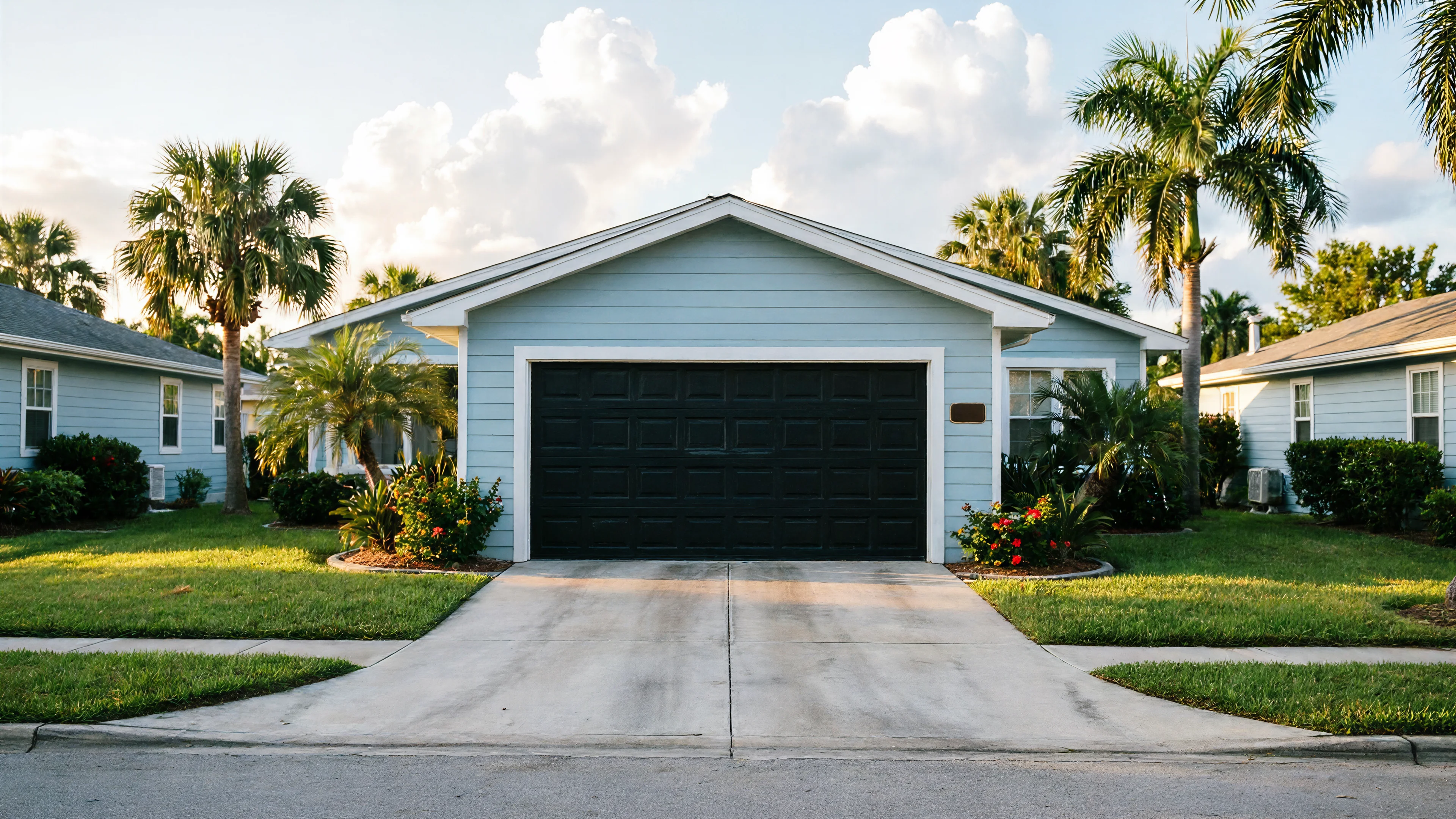
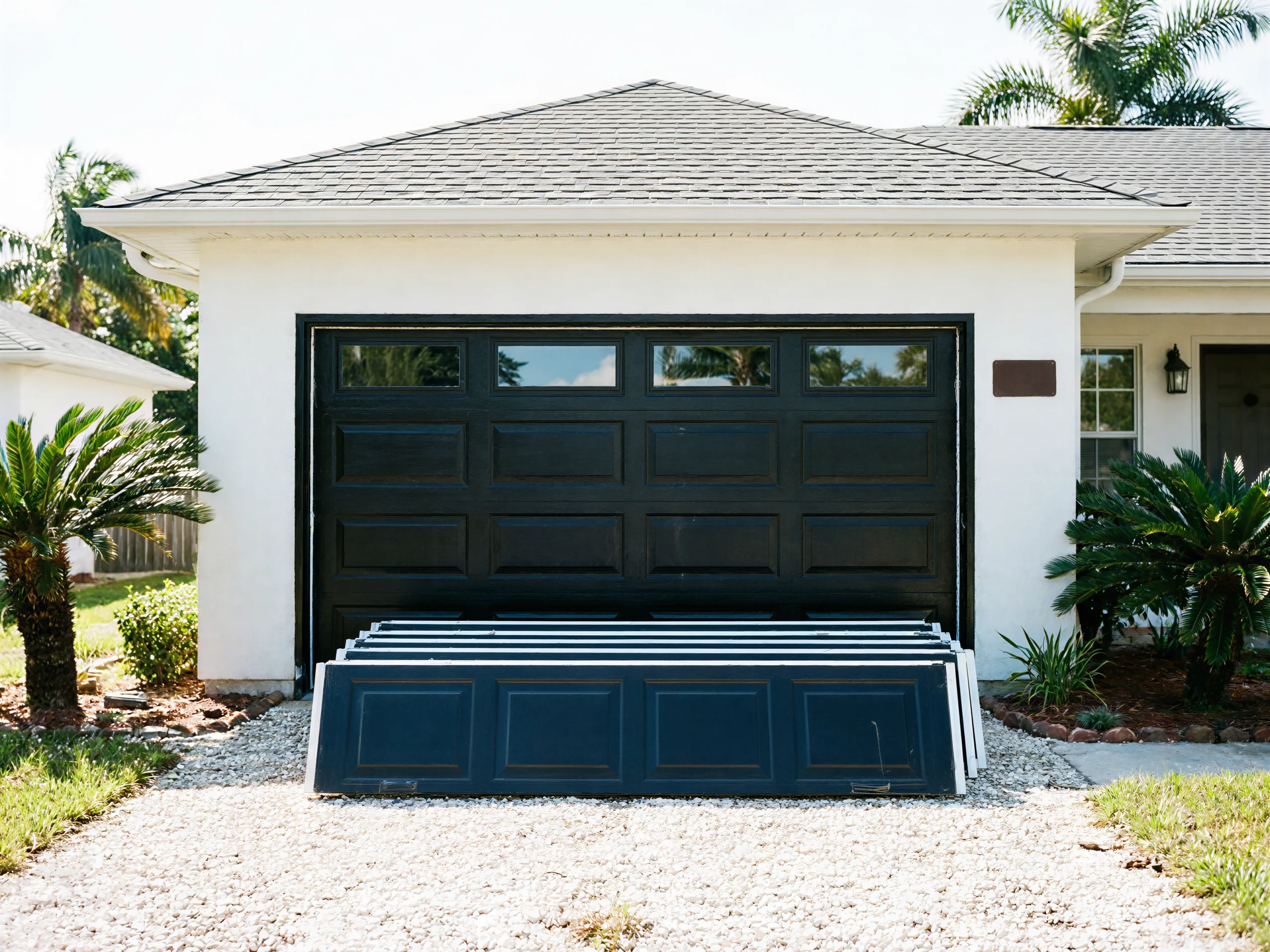
A light blue house with a black garage door and palm trees in the yard.

Timing

How Long It Takes

A straightforward opener repair - a failed capacitor, a stripped drive gear, a misaligned sensor, a dead logic board on a model where parts are still made - is usually a single visit.

Same-visit parts when stocked

We diagnose on site, and if the part is one we carry, it's done the same call. Where it takes longer: openers old enough that the manufacturer no longer makes the board or gear kit for that model.

Discontinued boards delay repair

That happens more often than you'd think given how much of the local opener stock dates back fifteen to twenty-five years. In that case we're either sourcing a compatible part, which can take a few days, or we're telling you straight that replacement makes more sense than chasing parts for a discontinued unit.

Repair that buys little

We'd rather say that up front than have you pay for a repair that buys you six more months. We won't quote a universal number here because it genuinely depends on what's actually wrong and what's still being made for that opener - but most working visits resolve the same day they start.

Our process

How We Fix It

First we test the opener itself before touching anything else - power at the outlet, the logic board, the motor, the sensors, the travel limits.

  1. Sensor fix, not motor

    A lot of what looks like an opener failure is actually a sensor knocked out of alignment or a wire chewed through, not a dead motor, and we're not going to sell you a new unit for a $20 fix. If the board or gear kit has failed and the opener is a model that's still supported, we repair or replace that component on the spot.

  2. Parts no longer made

    If the unit is old enough - and across this service area's mostly 1960s-70s-era housing, a lot of them are - that the manufacturer has stopped making parts for it, we'll tell you that directly and give you the honest comparison: patch an aging unit with a used or generic part, or put in a new opener that'll outlast the patch job.

  3. Half-working opener risk

    Either way, we test the full cycle before we leave - open, close, reverse on obstruction, sensor response - because an opener that half-works is worse than one that's honestly dead.

Questions

Common questions

Why did my opener suddenly stop working with no warning?

Usually it's not sudden - a capacitor or logic board was degrading for months before it finally gave out, and heat cycling in an uninsulated garage speeds that up. Given how much of the opener stock in this area is original to houses built in the 1960s and 70s, a lot of units are simply at the end of their working life.

Do you repair openers or only replace them?

We repair first whenever the part is still available and the fix makes financial sense. Replacement comes up more with older units, since manufacturers stop stocking boards and gear kits for discontinued models after a while - common with opener-age hardware across this service area.

Is it the opener or the door itself?

Often it's neither in the way you'd expect - a misaligned safety sensor or a loose wire can mimic a dead motor. We test the opener, the sensors, and the door's own balance separately before telling you which part actually failed.

Can humidity really damage an opener?

Yes. The mild, humid climate here is steady wear on circuit boards and plastic gear components, even without hard freezes. Garages that aren't conditioned see more heat and moisture cycling than the house itself, which shortens the life of sensors and logic boards specifically.

Ready when you are

Need a garage door sorted in Clearwater?

Clearwater Garage Door Pros repairs and installs garage doors, springs and openers in Clearwater, FL and the surrounding area.

Call NowGet a quote