Panel swap is DIY-friendly
If your opening is a standard size and you're comfortable with a torque wrench and a level, swapping panels on an existing track is within reach for a patient DIYer.
Keystone, Clearwater
Keystone homes run newer than most of Clearwater's stock, built mostly in the late 1990s. We install garage doors sized for that era's openings, not 1970s hardware.
Our process
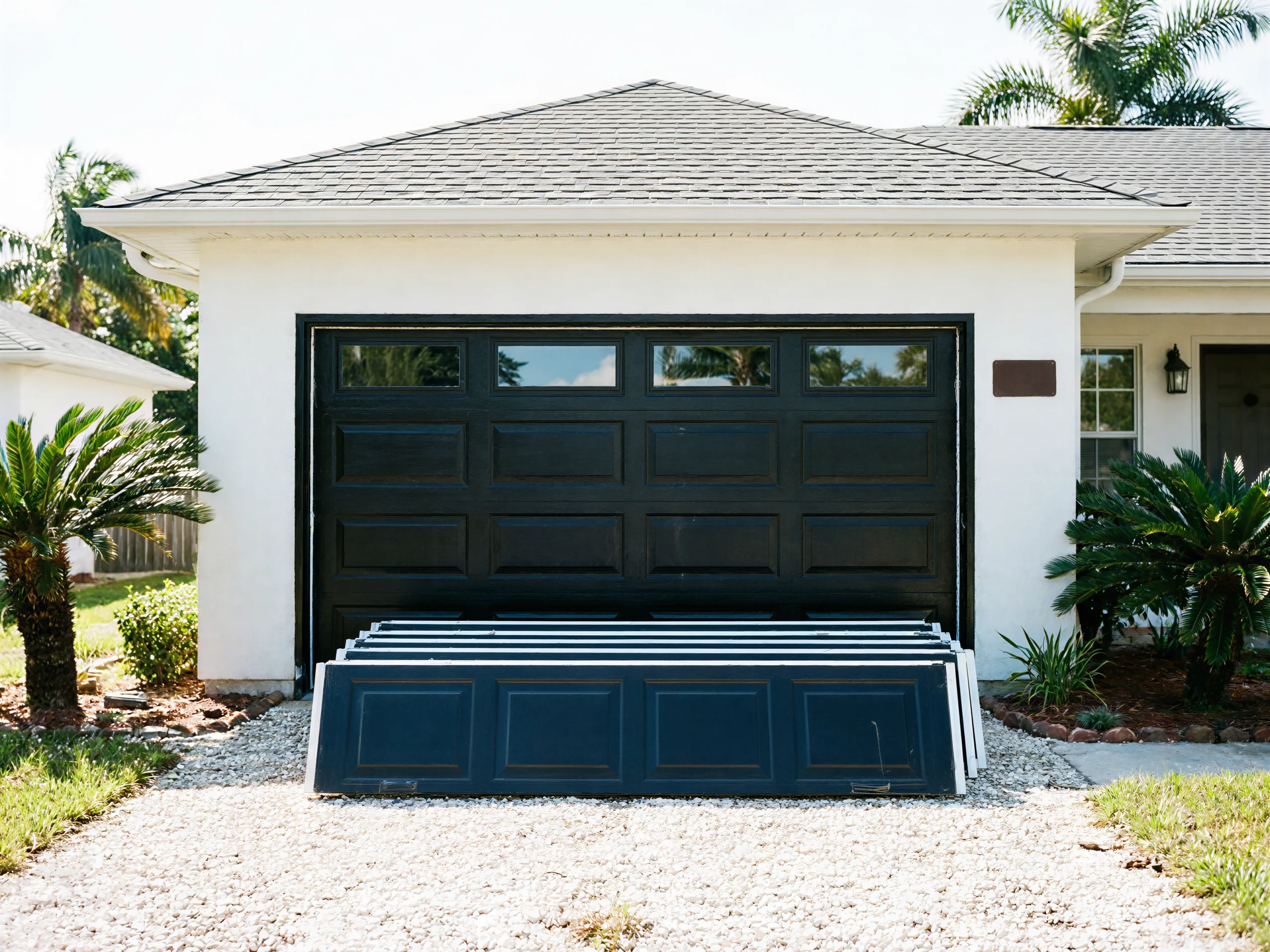
Keystone sits about 14 miles out from our Clearwater shop, and the job here looks different the moment we pull the old door off the track.
Across the wider service area the median house went up in 1979, with stock running from 1958 clear through 2005. Keystone itself skews newer, built around 1998, which means we're usually working with wider garage bays, taller openings for two-story construction, and steel jambs instead of the old wood framing you find on the 1960s side of the county.
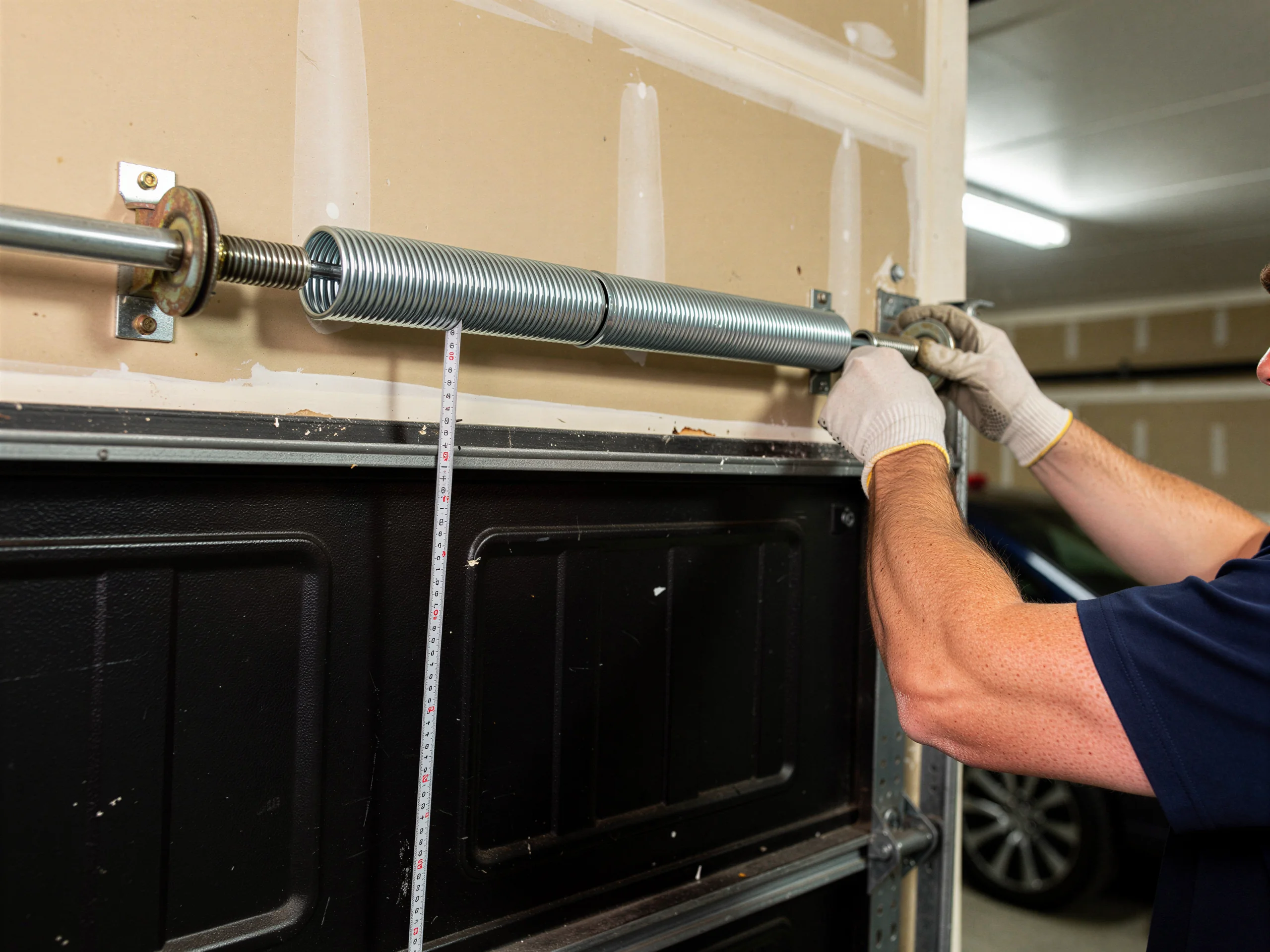
We measure the opening, confirm headroom and backroom for the track and spring system, and order a door sized to that jamb rather than assuming a standard 7-foot opening.
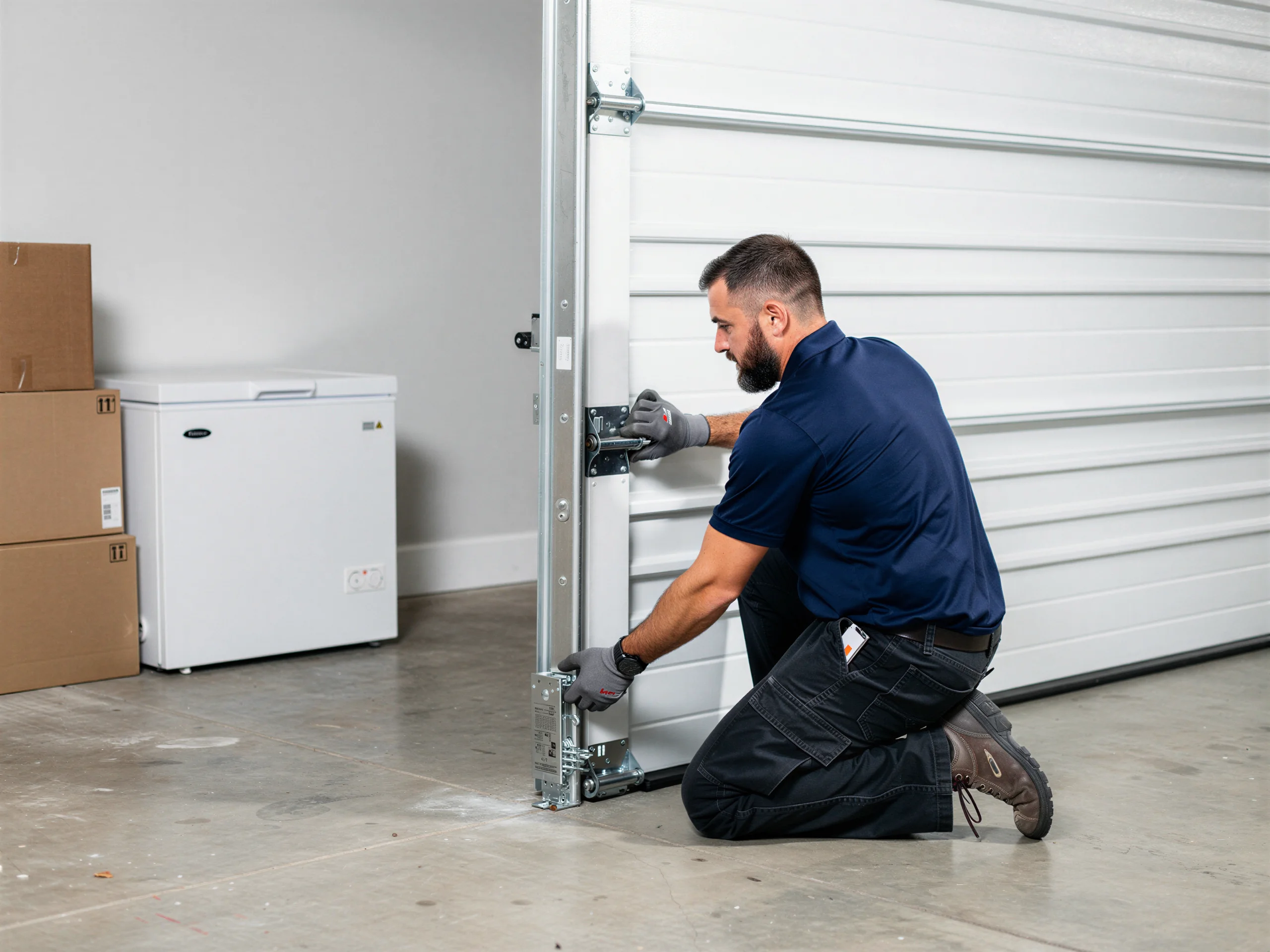
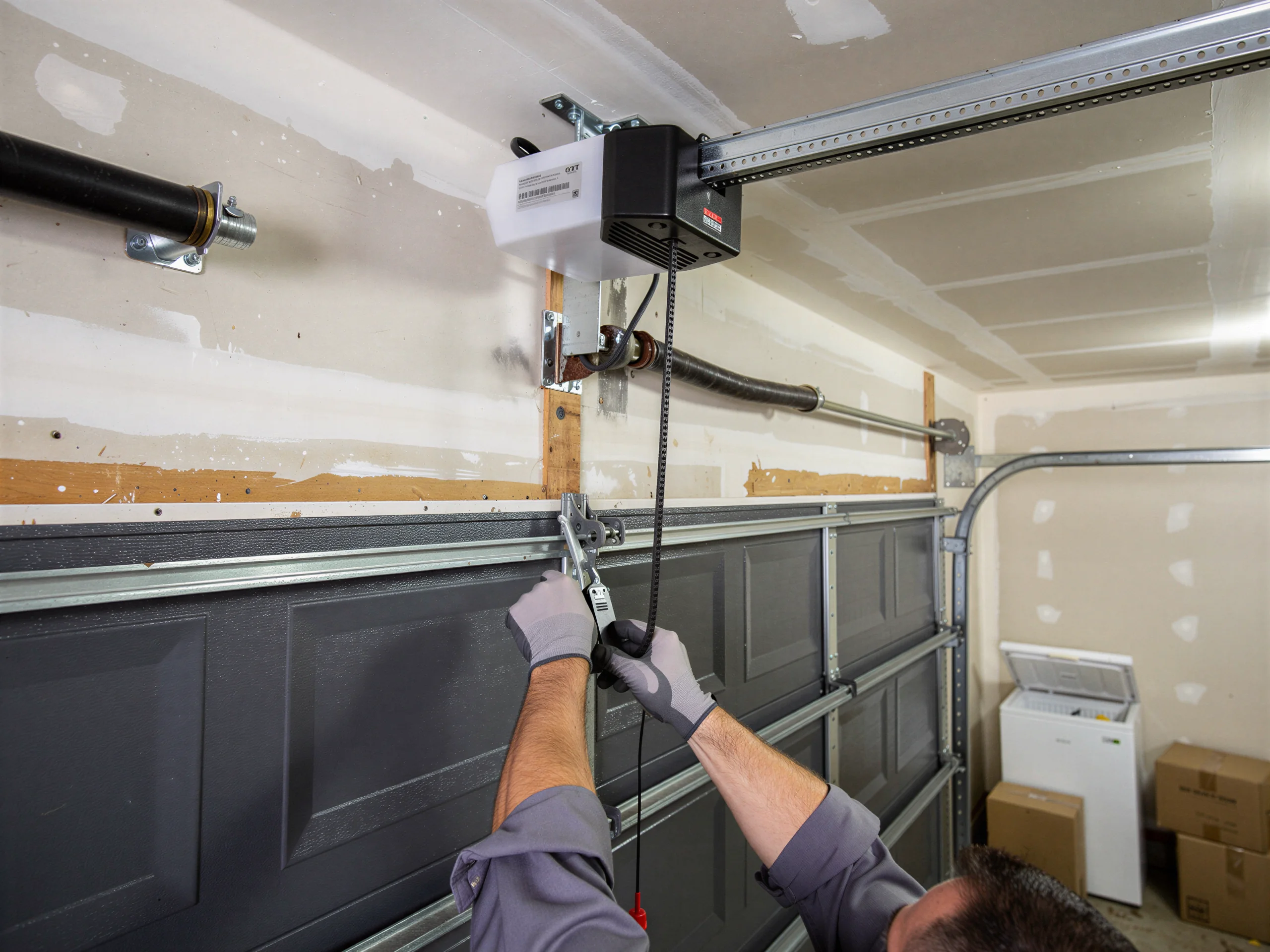
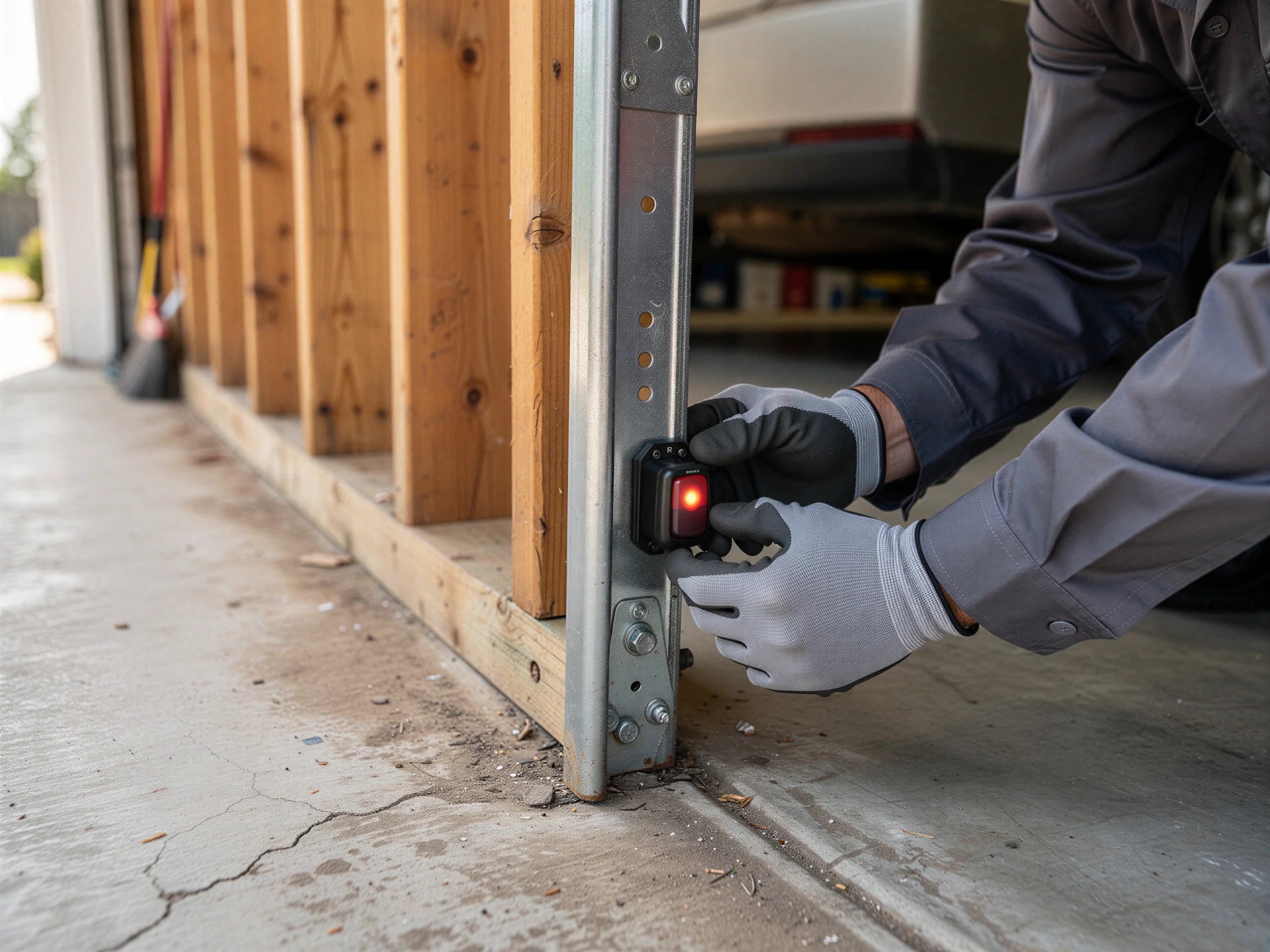
On a newer house the framing is usually square, which actually makes the install faster - less shimming, fewer surprises behind the trim. We set the track, mount the opener bracket, balance the spring to the door weight, and run it through a full cycle test before we leave.
DIY or pro
A new door install is not a weekend bolt-on job, and the spring system is the part that puts people in the ER - a wound torsion spring under full tension will break a wrist if the winding bar slips.
If your opening is a standard size and you're comfortable with a torque wrench and a level, swapping panels on an existing track is within reach for a patient DIYer.
Replacing the whole door, track, and spring assembly on a 1998-era opening is a different animal: you're setting new jamb brackets plumb, matching spring wire size to door weight, and wiring an opener to code.
We won't talk you out of trying if you've done it before. We will say that a door hung two degrees out of plumb will bind within a season, and by then you've paid twice.
Watch-outs
The most common mistake on a newer build isn't rot or rust - it's mismatch. A homeowner orders a door online sized for a generic opening, and it doesn't account for the extra headroom some 1990s Keystone garages were built with for storage shelving above the track. Install it anyway and you get a door that won't fully retract, or a spring rated for the wrong cycle count that fails in under two years. We've also seen openers mounted to trusses that weren't braced for the load, which is fine until the door's been cycling for a few months and the bracket starts to pull. None of this is dramatic at the time of install - it shows up three, six, twelve months later as a door that's suddenly noisy or slow.
Local causes
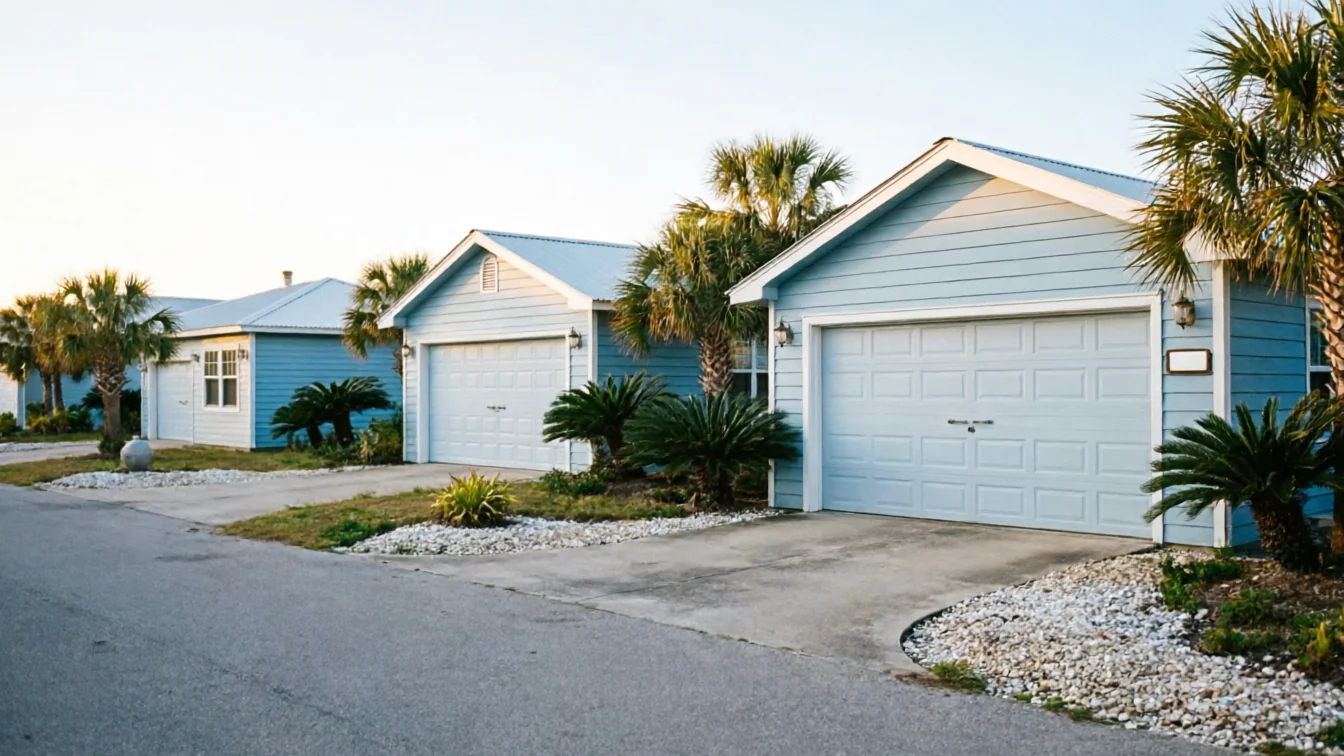
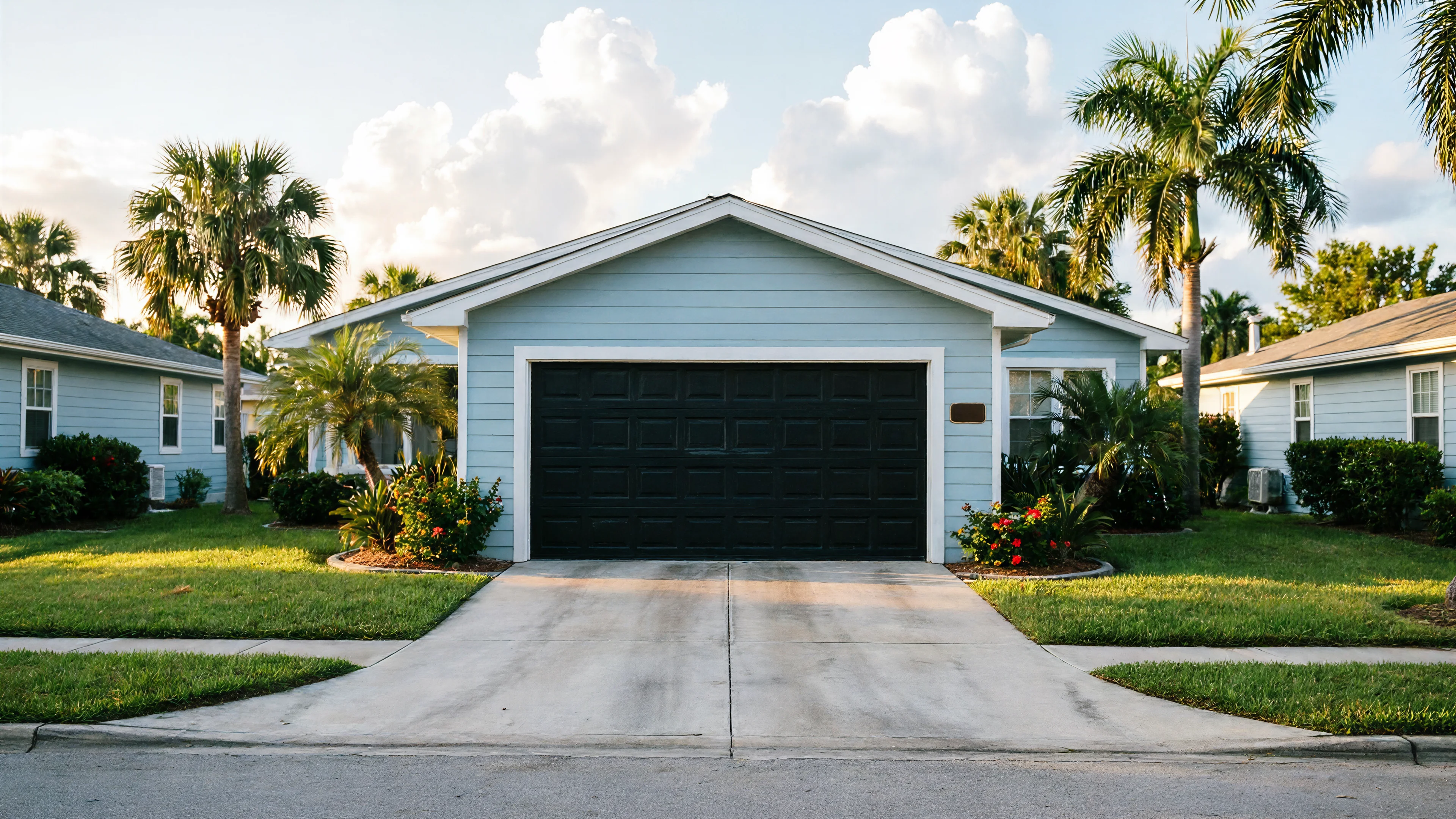
Keystone's climate is the same mild, temperate band the rest of the Clearwater service area sits in - no hard freezes, no deep cold to seize hardware. That's an advantage over a lot of the country, but it's not a free pass. Humidity and coastal moisture still work on galvanized track and spring coating over time, just slower than rust would in a harder climate. Because most of the housing here dates to the late 1990s rather than the 1960s-70s stock common closer to the bay, the doors we're replacing in Keystone usually aren't failing from decades of wear - they're failing from a cheaper builder-grade door and opener that came standard with the house and were never upgraded. That's a different conversation than the one we have on an older block: less about hardware that's simply worn out, more about upgrading to a door built for another 20 years.
Symptoms
The signal that it's time for a new door rather than another repair is usually simple: the door takes two or three tries to close, the panels have started to bow at the bottom corner, or the opener strains and reverses partway through the cycle.
On a builder-grade door from a 1998 build, that bowing often shows up around the bottom panel first, since that's the weakest point on a lighter-gauge steel door.
If you're also hearing a grinding sound from the opener, that can mean the door itself has gotten heavier to lift than it should be - a sign the panels are no longer structurally even, not something you fix by tightening a bolt.
Pricing
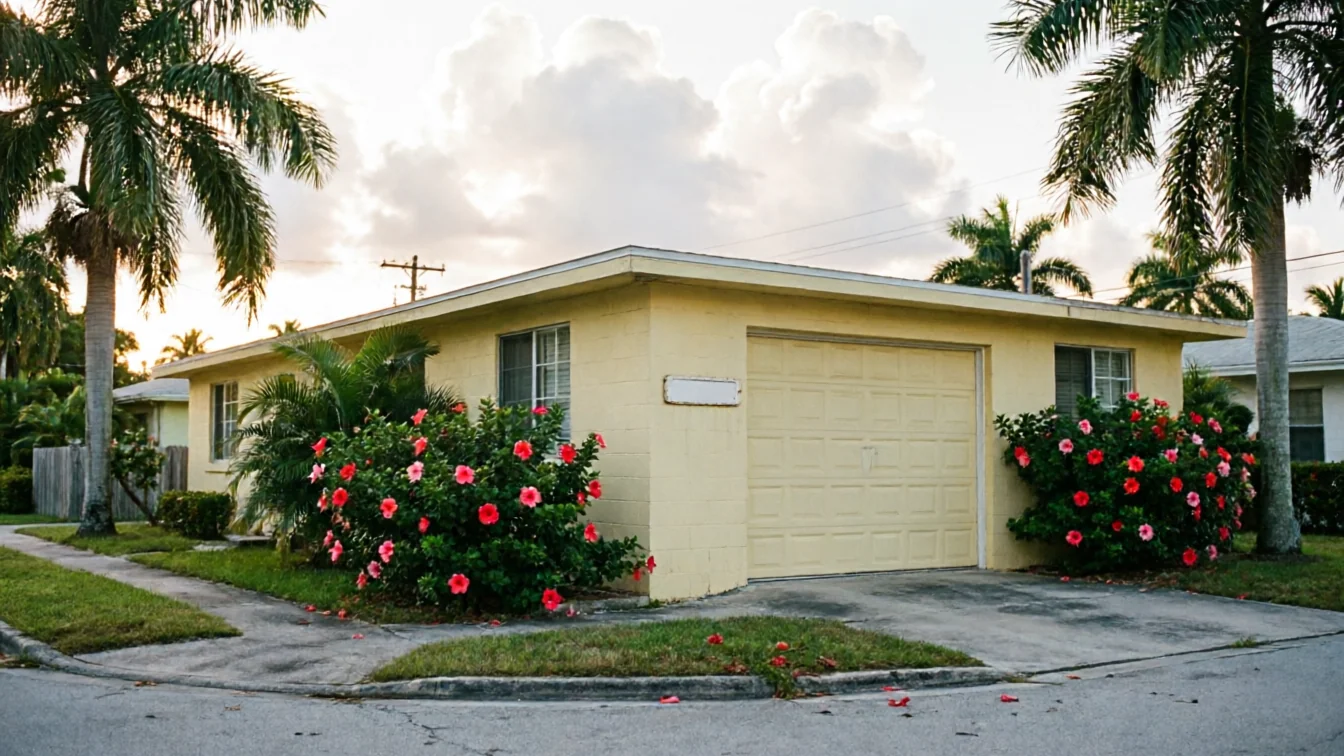
We don't have a published price list for Keystone installs - door cost depends on size, insulation, and whether you're keeping the existing opener or replacing it too. What we can tell you: the area's median household income runs well above the service-area average, which is one reason we see more requests here for insulated steel and higher-end composite doors rather than the base builder model. We quote the job on-site after we've measured the opening and confirmed what track and spring setup the house needs - we won't give you a number over the phone that doesn't account for what's actually behind your garage wall.
Questions
No - we run out of Clearwater and travel out to Keystone for installs, about 14 miles each way. There's no local branch here, just a truck that comes to you for the job.
Often yes, since most houses here were built around 1998 with fairly standard framing, but we still measure before ordering. Some houses built in that era have extra headroom for storage, which changes the track setup.
Not especially - the area sits in a mild, temperate band with no hard freezes. Humidity and coastal moisture do work on hardware over time, but it's a slower wear pattern than colder climates see.
Housing across the wider service area runs from 1958 to 2005, with a lot of 1960s-70s stock near the bay. Keystone's newer, around 1998, so we're usually dealing with builder-grade doors needing upgrade rather than decades-old hardware needing full rework.
Explore more
Ready when you are
Clearwater Garage Door Pros repairs and installs garage doors, springs and openers in Clearwater, FL and the surrounding area.